
Kotak Bank was the top loser in the Sensex pack, shedding over 2 per cent, followed by ICICI Bank, PowerGrid, HDFC, IndusInd Bank and Axis Bank. NSE Nifty declined 45.75 points to 16,568.85.

Risk aversion is currently a dominant depressant to economic recovery, points out Shankar Acharya, former chief economic advisor to the Government of India.

An estimated 1.5 lakh people are being shifted from low-lying coastal areas in Gujarat while 54 teams of the NDRF and SDRF remained deployed on Sunday in view of the India Meteorological Department's (IMD) warning that the very severe cyclonic storm Tauktae will reach the state coast on Monday evening and cross it on early Tuesday morning.

The technical report of the NSSO has generated controversy following its observation that as much as 36 per cent units forming part of MCA-21 database, used in computing GDP, could not be either identifiable or traceable in the field.

Like 2017-18, govt will seek comments from the public at large, including Facebook and Twitter

Even as Chinese troops continue squatting on territory that we claim as our own -- this was the lowest allocation for defence in percentage terms since the 1950s, reveals Ajai Shukla.

For years it has been evident that fibre and DTH would give tough competition to cable in India where regulatory overload has mutilated an already warped industry structure. OTT added fuel to the fire. From Rs 27,000 crore in 2010, cable's share of subscription revenues is now estimated at Rs 13,000 crore.

Agriculture, which accounts for 14% of GDP grew at 3.2% in the quarter

In a bad start to the new year, hotels are counting their losses again. Weddings and corporate events for this month have either been called off or postponed. The blow has throttled the nascent recovery which had kicked in around August. It is primarily hurting the banquet-driven hotel chains, some of which are seeing cancellations running into lakhs for a single day.

The hit to economic activity will be mostly confined to the first quarter. And a third wave, if it materialises, is unlikely to be hugely disruptive for the economy, predicts T T Ram Mohan.

India's equity markets are on a roller-coaster ride, after delivering spectacular returns for two consecutive years - in 2020 and 2021. The benchmark National Stock Exchange's (NSE's) Nifty50 is down 1.5 per cent in the first nine months of the current calendar year 2022 (CY22) as foreign portfolio investors sold Indian stocks due to rising bond yields in the US and across global markets, including India. The sell-off in the Indian equity markets has, however, not been broad-based and largely limited to sectors facing earnings headwinds from rising interest rates, lower commodity and energy prices, and likely economic recession in advanced economies.

IT spending in India is projected to rise 6 per cent to $81.9 billion in 2021 compared to this year on the back of growth across segments like enterprise software and IT services, research firm Gartner said on Monday. IT spending in 2020 is expected to total $79.3 billion, down 8.4 per cent from 2019. "The COVID-19 pandemic stalled many digital transformation projects for Indian enterprises, mainly because of the market uncertainties and reduced cash flows," Gartner research vice president Arup Roy said.

Personal income tax saw contraction shrink to 13 per cent by November from 22 per cent seen up to September, on the back of lower issuance of refunds and improvement in economic conditions.

High-level intelligence collection will no longer be the preserve of government agencies alone, says Pranjal Sharma.

American brokerage BofA Securities on Friday said the Indian economy continues to be "weak", pointing to activity indicators tracked by it. On the positive side, the brokerage said credit demand is bottoming out and the real lending rates adjusted for wholesale price inflation are falling. It can be noted that there has been a slew of reports lately about a stronger recovery being underway after the jolt caused by the pandemic.

The combined fertiliser, food and petroleum subsidy budgeted estimate for FY19 is Rs 2.64 trillion, while the revised estimate is Rs 2.66 trillion. If the carrying forward to FY20 does not happen, the revised estimates for the major subsidies could actually cross Rs 3 trillion for the first time ever.
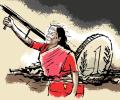
While presenting her 2021-22 Union Budget, Finance Minister Nirmala Sitharaman had set a fiscal deficit target of 6.8 per cent of nominal gross domestic product (GDP) against the 2020-21 Revised Estimate of 9.5 per cent. The fiscal correction in the upcoming 2022-23 Union Budget is unlikely to be that steep. Even as discussions among top Budget-makers are ongoing, the fiscal deficit target for 2022-23 may likely be in the range of 6.5-6.8 per cent.

Titan was the top gainer in the Sensex pack, rising around 4 per cent, followed by HDFC, Nestle India, IndusInd Bank, UltraTech Cement and Bharti Airtel. On the other hand, Bajaj Auto, Tata Steel and NTPC were the laggards.

The reduced growth is largely because of consumption slowdown and tax rate cuts.

The six-member monetary policy committee voted 5:1 for the decision, with only Ravindra Dholakia voting for a 0.25 per cent reduction in rates.

Shipment of 5G smartphones in the country continues to gain traction and such devices accounted for 22 per cent market share in the third quarter of 2021, according to CMR. As per CMR's India Mobile Handset Market Review Report for Q3 2021, more than 20 5G-capable smartphones were launched over the course of the quarter.

71 districts reported Covid case positivity rate of more than 10 per cent in the week from June 23 to 29, the government said, adding that the second wave of COVID-19 is not over.

Now that almost 10 infrastructure ministries have submitted a fresh list of their core infrastructure assets, the government has realised it stands to make much more money from asset monetisation than previously thought. Two persons in the government said it stood to garner over 30 per cent more than the earlier estimates of Rs 2.5 trillion over the next four years under the National Monetisation Pipeline (NMP). The NMP, which is being prepared by Niti Aayog, is in the advanced stages of finalisation and is expected to be unveiled in August.

Among Sensex stocks, L&T was the top loser, shedding 2.19 per cent, followed by ONGC, Titan, Sun Pharma, Hero MotoCorp and Infosys.

India has purchased 500 million doses of the Oxford University-AstraZeneca vaccine candidate, one billion from the United States company Novavax and 100 million doses of the Sputnik V candidate from Russia's Gamaleya Research Institute, according to the US-based Duke University Global Health Innovation Center.
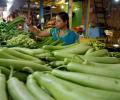
Not only primary vegetables, but also additives like garlic, ginger and chilly have recorded a sharp increase in prices

The forecast of deficient monsoon rainfalls scared farmers.

'Did the Moneyball philosophy get redefined in the domain of the cash-rich IPL, which has become an integral part of the cricketing ecosystem?' asks Atanu Biswas.

The panel finds 'discrepancy' in the Annual Survey of Industries data.

Axis Bank and ICICI Bank consumed 37-59 per cent of their operating profit for COVID-19 provisioning, while the figure is 24 per cent in case of Kotak Mahindra Bank and 10-12 per cent for IndusInd Bank and HDFC Bank.

The repo rate has been left unchanged at 4 per cent, Governor Shaktikanta Das said while announcing the decisions taken by the central bank's MPC.
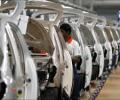
At present, the NMP states a series of fiscal incentives, including tax sops, will be offered but only to small and medium enterprises.
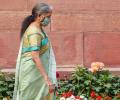
While a DFI will help banks derisk their loan portfolios, creation of a bad bank will clean up their balance sheets.

It's raining IPOs, with eight issues hitting the market in a span of six days. However, the pace of new filings points to a deluge during the latter part of the year. So far this year, 58 companies have filed their draft red herring prospectus (DRHP) with the market regulator for initial public offerings (IPOs), exceeding the combined tally of 50 in the last two years. Industry participants said the filing count could cross 100 this year, setting a new benchmark in terms of amount mobilised in a calendar year.
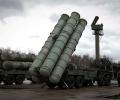
RInstead of disengagement, the Indian and Chinese armies have deployed an estimated 35,000 to 40,000 soldiers each along the LAC. The PLA has deployed S-400 air defence missiles to neutralise the IAF's advantage in air power

If the government is able to deliver the promised projects, the large number of youth will be taken off the streets and that is not acceptable to the Pakistan army nor the terrorists hiding in Pakistan, notes Brigadier Narender Kumar (retd).

The central government is likely to exceed the budgeted tax collection target of Rs 22.2 trillion for the current fiscal year, led by better indirect tax mop-up, compliance measures, and recovery in most sectors following the second wave of the Covid pandemic. Personal income and corporate tax collections (net of refunds) grew 74 per cent to Rs 5.70 trillion in the first half of the current financial year, driven mainly by advance tax and TDS payments. The target for the current fiscal year is Rs 11.08 trillion; higher taxes are paid usually towards the end of a fiscal year.

Poor rainfall has also depleted water reservoirs levels, which is likely to impact the winter crops.

Real consumer spending grew four per cent at an annual rate in the third quarter, substantially up from the 2.6 per cent pace during the preceding four quarters

The severity of the second wave of COVID-19 infections in India poses a key challenge for the FMCG industry and the spread of the virus to rural areas on a relatively higher scale as compared to the first wave is also expected to weigh on industry growth outlook, according to ITC Ltd. There is heightened uncertainty around the timing and shape of the recovery trajectory of overall economic growth in India due to the virus, the company said in its Annual Report for 2020-21. In terms of consumption, urban-led recovery may be relatively muted compared to the first wave as consumers switch to precautionary savings mode and rising healthcare costs eat into household spending, while rural demand may also be blunted by the large-scale spread of the virus to the hinterland in the second wave.
 © 2026 Rediff.com - Advertise with us - Disclaimer - Privacy Policy - Sitemap - Feedback - About us - Terms of use - Grievances